
Plastic injection molding is one of the most widely used manufacturing processes in the United States. It produces components for medical devices, automotive interiors and exteriors, consumer packaging, industrial equipment, electronics, and a large portion of the everyday objects found in homes and workplaces. Because the process is so broadly applicable, a large number of companies operate as injection molders in the US, ranging from small job shops to large-scale contract manufacturers with multiple facilities.
This article presents a selection of US injection molding companies that are publicly verifiable as active injection molders with US operations. Inclusion is based on publicly available information from official company websites and established industry sources. The list is not a numerical ranking, endorsement, or claim that one company is the best, largest, or most capable. Revenue, employee counts, customer names, machine tonnage, and production capacity figures are included only where confirmed by verifiable sources. Unverifiable specifics are omitted.
After the company list, a separate section covers what injection molding operations need from automation suppliers - and how Yushin America fits into that picture.
US Injection Molding Companies: A Selection
Tessy Plastics
Tessy Plastics is a family-owned contract manufacturer specializing in plastics processing, precision tooling, complex assembly, and automation design and build. Its current capabilities include injection molding and high-volume contract manufacturing, with major markets including medical, pharmaceuticals and diagnostics, and consumer products.
| Aspect | Details |
|---|---|
| US Base | Skaneateles, New York |
| Markets | Medical, pharmaceuticals and diagnostics, consumer products |
| Capabilities | Injection molding, precision tooling, assembly, automation design and build |
Matrix Tool, Inc.
Matrix Tool, Inc. is an engineering-driven injection molding and tooling company based in Fairview, Pennsylvania. The company specializes in high-precision and micro injection molding, precision mold building, and complex molded components using engineering-grade thermoplastics. Its work serves demanding applications across automotive, computer and electronics, medical and pharmaceutical, and other technical markets.
| Aspect | Details |
|---|---|
| Location | Fairview, Pennsylvania |
| Focus | High-precision and micro injection molding |
| Capabilities | Injection molding, micro molding, precision mold building, engineering |
World Class Plastics, Inc.
World Class Plastics, Inc. is a custom plastic injection molding manufacturer based in Russells Point, Ohio. Its capabilities include custom injection molding, engineering and design support, tool and mold building, automation, and value-added manufacturing services. The company serves applications across automotive, medical, dental, aerospace, industrial, appliance, electronics, and other manufacturing markets.
| Aspect | Details |
|---|---|
| Location | Russells Point, Ohio |
| Markets | Automotive, medical, aerospace, industrial, consumer and related markets |
| Capabilities | Injection molding, engineering and design, tooling, automation, value-added services |
Nifco America
Nifco America is a plastics manufacturer with injection molding as a core production capability. Its current capabilities include standard injection molding, twin-shot molding, and insert molding, along with design, assembly, and in-house automation. Nifco produces plastic components and systems for automotive applications including fasteners, interior and exterior components, powertrain, fluid-control, and motion-control products.
| Aspect | Details |
|---|---|
| Primary Market | Automotive |
| Molding Capabilities | Standard injection molding, twin-shot molding, insert molding |
| Additional Capabilities | Design, assembly, in-house automation |
Thogus
Thogus is a family-owned custom plastic injection molder and contract manufacturer headquartered in Avon Lake, Ohio. The company focuses on medium-to-high-volume molding and supports applications across consumer products, healthcare, packaging, industrial products, and other markets. Its injection molding capabilities include standard custom molding, insert molding and overmolding, two-shot molding, and gas-assist molding.
| Aspect | Details |
|---|---|
| HQ Location | Avon Lake, Ohio |
| Production Focus | Medium-to-high-volume injection molding |
| Capabilities | Custom molding, insert/overmolding, two-shot molding, gas-assist molding |
Flex-N-Gate
Flex-N-Gate is a large US automotive supplier with injection molding among its manufacturing capabilities. Headquartered in Urbana, Illinois, the company produces plastic bumpers, fascias, and exterior trim components for automotive OEMs. Flex-N-Gate operates multiple facilities in North America and is publicly known as a supplier to major vehicle manufacturers.
| Aspect | Details |
|---|---|
| HQ Location | Urbana, Illinois |
| Markets | Automotive OEM |
| Noted Capability | Bumpers, fascias, exterior trim |
Jabil Inc.
Jabil is a global manufacturing services company headquartered in St. Petersburg, Florida. The company's website describes injection molding as one of its manufacturing capabilities, alongside other plastics processes. Jabil serves healthcare, consumer electronics, automotive, and industrial markets and operates facilities in the US and internationally. Jabil's healthcare organization also includes Nypro-branded healthcare operations.
| Aspect | Details |
|---|---|
| HQ Location | St. Petersburg, Florida |
| Operations | US and international |
| Markets | Healthcare, electronics, automotive, industrial |
Rex Plastics
Rex Plastics is a custom injection molding contract manufacturer based in Vancouver, Washington. Its current website lists injection molding, mold making, design/prototyping, and secondary operations among its capabilities and identifies markets including electronics, security, medical, communications, and consumer products.
| Aspect | Details |
|---|---|
| HQ Location | Vancouver, Washington |
| Markets | Electronics, security, medical, communications, consumer |
| Services | Injection molding, mold making, design/prototyping, secondary operations |
Rogan Corporation
Rogan Corporation provides custom plastic injection molding from its facility in Northbrook, Illinois. Its current capabilities include single-shot molding, two-shot molding, insert molding, overmolding, tooling, decorating, assembly, and packaging, with markets that include medical, aerospace, industrial, and consumer applications.
| Aspect | Details |
|---|---|
| Location | Northbrook, Illinois |
| Markets | Medical, aerospace, industrial, consumer |
| Services | Injection molding, tooling, decorating, assembly, packaging |
A Note on This List
The companies above were selected because current public information from their official websites verifies injection molding as an active capability. The list is not exhaustive and is not a ranking or endorsement. Company capabilities, locations, certifications, and services can change, so buyers should verify the requirements relevant to their project directly with each company.
No company on this list has been evaluated, ranked, or endorsed. Buyers evaluating injection molding partners should conduct their own due diligence, including facility audits, certification verification, and reference checks appropriate to their specific requirements.
What High-Performing Injection Molding Operations Need From Automation
Injection molding companies - whether they are in-house production departments or contract molders - share a common operational challenge: making the press and everything downstream of it run reliably, at speed, with consistent part quality.
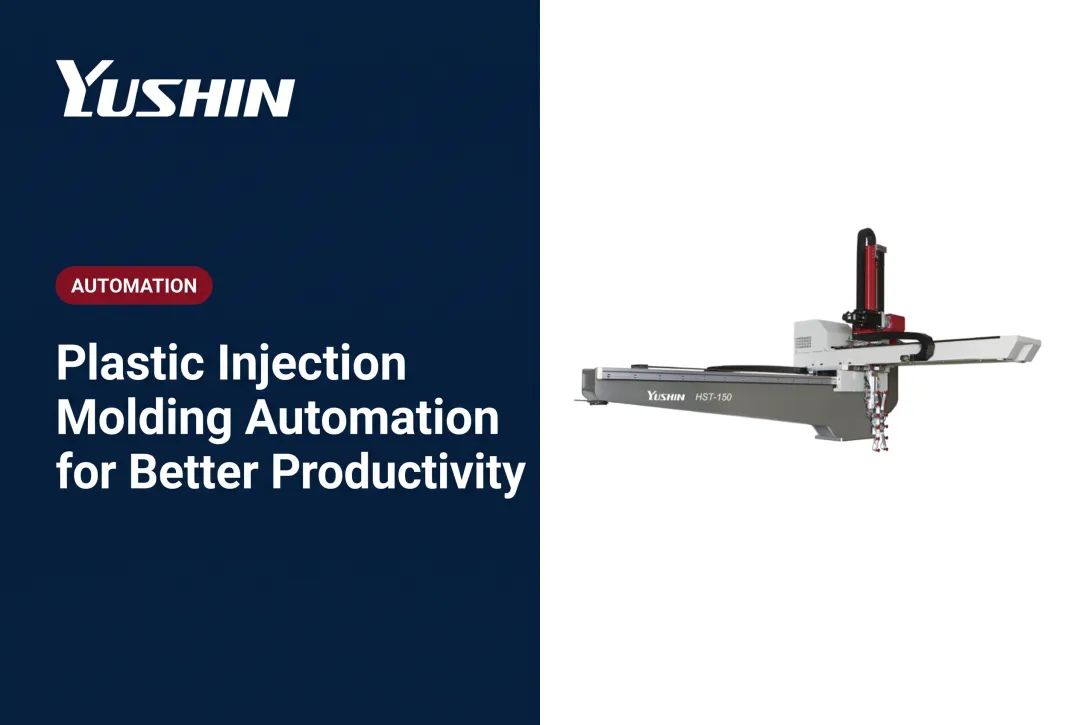
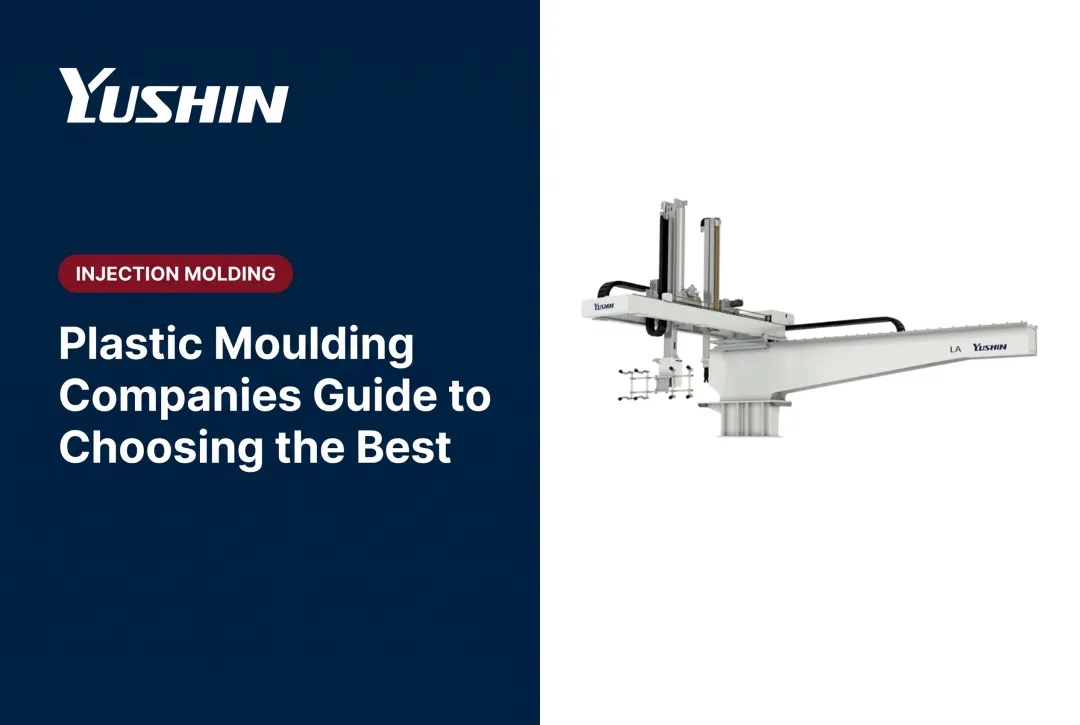
This is where automation suppliers like Yushin America play a role. Yushin does not mold parts. Yushin designs and supplies the robots, tooling, and integrated systems that injection molding operations use to automate their processes.
Here is what high-performing injection molding operations typically need from their automation:

Repeatable take-out - the robot should follow a consistent programmed extraction sequence that fits the mold-open window and handles the part appropriately for the application. Robot motion, EOAT, mold access, and interlocks all affect take-out performance.
Application-specific EOAT - the gripping system should be evaluated against the part geometry, material, cavity layout, gate/runner arrangement, payload, mold access, and downstream handling requirements. EOAT that does not fit the application can create part-handling or cycle-time problems.
Cycle time - the robot's entry, extraction, mold-clear, transfer, and return sequence should be evaluated against the actual molding cycle. Where robot take-out is a constraint, motion profile, EOAT, payload, stroke, and robot configuration all need to be reviewed together.
Insert molding and IML capability - applications that require loading inserts or in-mold labels before the shot demand precise, repeatable placement from the robot. This is one of the more demanding take-out applications and requires engineering review of the tooling and motion requirements.
Inspection integration - vision systems that inspect parts for flash, short shots, sink marks, or label placement can be integrated into the take-out cell so that out-of-specification parts are diverted before they reach downstream packing.
Downstream handling - conveyors, degating, assembly, inspection, packing, and box-loading systems can extend automation beyond part take-out. If a cell is being engineered for reduced-attendance or unattended operation, these downstream steps, fault handling, material flow, safety systems, and monitoring must be considered together.
Packing and palletizing - where the production process requires automated packing or load building, these systems must be sized around the actual line rate, pack pattern, load characteristics, available floor space, and downstream logistics requirements.
Service, parts, and technical support - an automation system is only as reliable as its service infrastructure. When a take-out robot faults at 2 am on a lights-out shift, the response time and parts availability of the supplier determine how long the press stays down.
Systems integration - a complete automated cell may require coordination of robot motion, EOAT, controls, interlocks, safety systems, inspection, conveyors, and downstream equipment. The required integration scope depends on the molding process and production requirements.
How Yushin America Serves Injection Molding Operations

Yushin America was established in 1988 to support the North American market. Its parent company, Yushin Company of Kyoto, Japan, was founded in 1973 and entered the take-out robot market in 1978. Yushin America's current plastics-automation capabilities include:
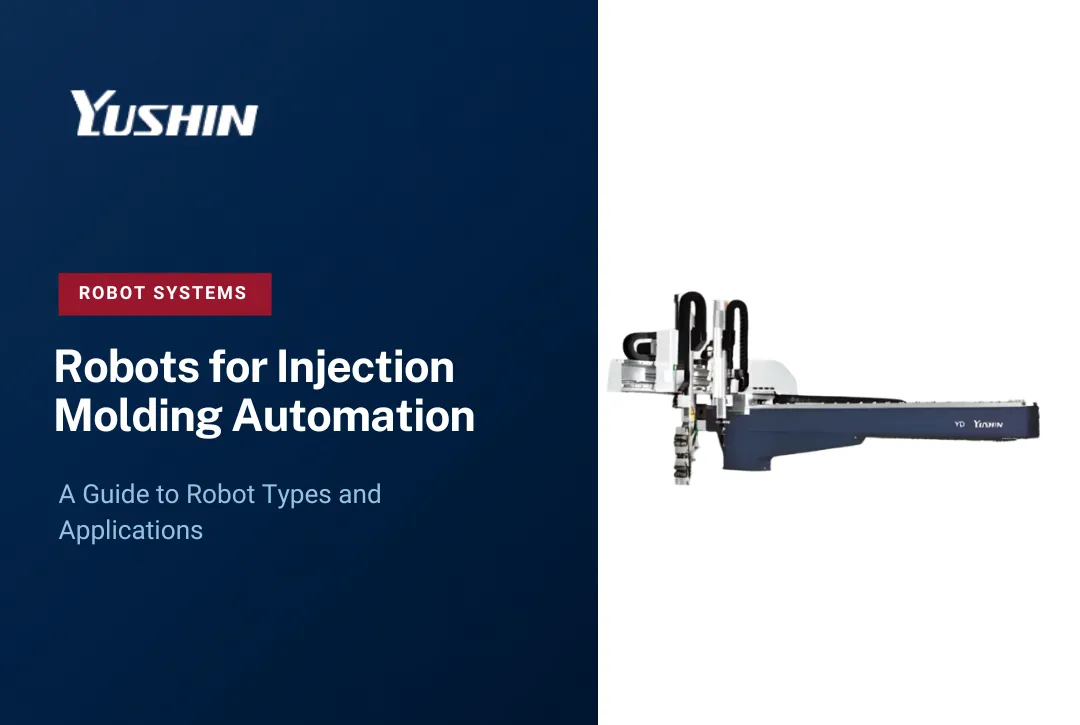
- YD and YD2 take-out robots - servo-driven Cartesian robots for part and sprue removal across a range of press sizes
- EOAT design and fabrication - application-specific end-of-arm tooling engineered for the part, mold, and production requirements
- Conveyor systems - integration of parts handling conveyors into the molding cell
- Downstream automation - inspection integration, bagging, box loading, and the PA Compact Palletizing Robot for end-of-line stacking
- INTU LINE production monitoring for the FRA platform - production counts, operating status, cycle times, error information, and related monitoring data that can support visibility into appropriately engineered automated production
- Application engineering services - design, engineering, and commissioning of complete integrated automation cells
If your injection molding operation is evaluating take-out robots, EOAT, downstream automation, or a fully integrated production cell, contact Yushin America to discuss your application requirements.
Frequently Asked Questions
How many injection molding companies operate in the USA?
The US injection molding industry includes hundreds of active companies ranging from small regional job shops to large multi-facility contract manufacturers. Comprehensive industry counts vary by source and definition.
What should I look for when choosing an injection molding company?
Evaluation criteria depend on the project, but may include the molder's relevant quality certifications, molding and tooling capabilities, machine range, materials experience, part-size capability, secondary operations, production capacity, geographic footprint, and experience with similar applications. Verify any certification or capability directly with the company before supplier selection.
What certifications should I verify when evaluating a US injection molder?
Certification requirements depend on the end market, customer, product, and supplier role. Depending on the project, buyers may need to verify certifications or registrations related to general quality management, medical manufacturing, automotive production, aerospace/defense, or other regulated requirements. Do not assume a certification is required or currently held without checking the molder's current documentation.
What is the difference between an injection molder and an injection molding automation supplier?
An injection molder produces plastic parts using injection molding presses. An injection molding automation supplier, such as Yushin America, designs and supplies the robots, tooling, and integrated systems that molders use to automate their processes. They serve the molding industry as an equipment and engineering supplier, not as a molder themselves.
How does automation affect injection molding quality and output?
Servo-driven take-out robots improve cycle consistency by removing parts at the same point in every cycle with the same motion path. This reduces variation in part cooling time, handling damage, and gate stress compared to manual removal. Downstream automation further reduces handling variation through packing and palletizing.
Are injection molding companies concentrated in particular US regions?
Injection molding companies operate across the United States, with many located in established manufacturing regions and near major automotive, medical, packaging, consumer-product, and industrial supply chains. This article does not rank states by company count because totals depend on the source, company definition, and reporting period.